3D Projection Mapping for Corporate Events: Investment, ROI and What to Expect | EchoLight UAE
EchoLight · 3D Projection Mapping · UAE Corporate Events
3D ProjectionMappingInvestment, ROI, and what actually happens between brief and event day.UAE Corporate Events
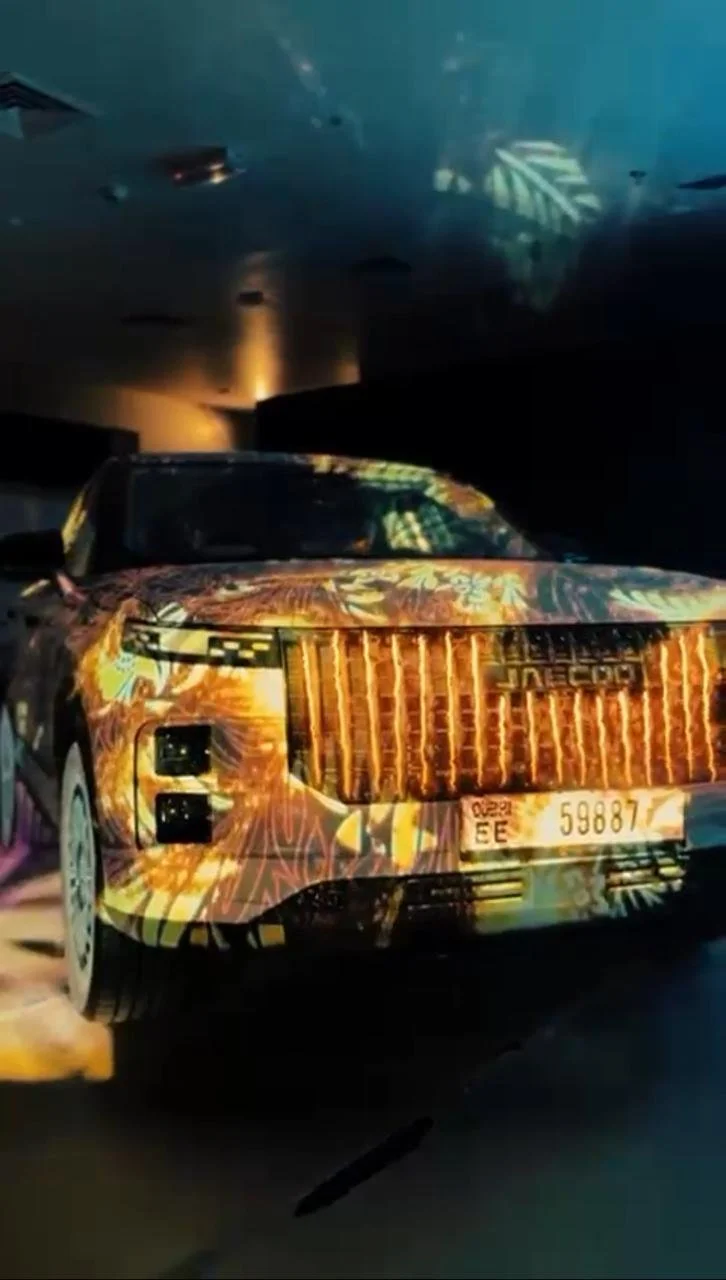
LED screens show content. Projection mapping turns your environment into content. Here's what that distinction costs, what it requires, and what it produces in the room.
Everyone thinks 3D projection mapping is "rent a projector, press play."
That's adorable.
The projector is maybe 15% of the production.
The other 85% is what happens in the weeks before anyone turns it on —
and understanding that is the only way to evaluate the investment honestly.
Here is the honest evaluation.
3D projection mapping for corporate events in the UAE is one of the most technically complex and visually transformative things in the production toolkit. It is also one of the most frequently misunderstood — by both the clients who commission it and the suppliers who quote it. This guide covers the real production process, the real pricing, the real ROI argument, and the real failure modes. If you are considering projection mapping for an event in Abu Dhabi or Dubai, read this before you brief anyone.
3D projection mapping — corporate event production · UAE · EchoLight
The Full Production Process: Where the Time Actually Goes
Seven phases — and why the event day is the easiest part
The most important thing to understand about projection mapping production is that the event is not where the work happens. The event is the delivery. The work is everything before it — and most of it is invisible to the client until it either works perfectly or doesn't.
1
Brief & Concept
Translating "immersive" into physics
Identifying surfaces, viewing angles, ambient light reality, and storyline. Where time goes: killing bad ideas politely, aligning expectations with what the venue's ceiling height and power supply actually permit, and building the reference structure before a single model is opened.
10–20%
2
Site Survey & Technical Design
Where projects live or die
Measuring surfaces — not estimating, actually measuring. Projector positions, throw distances, brightness calculation, blending design, power and rigging. Where time goes: fixing architectural lies ("this wall is flat" — it is not), solving sightline conflicts, designing around the chandeliers and LED screens that someone added after the original brief.
20–30%
3
3D Modelling & Mapping Prep
Building the surface in three dimensions
Exact geometry model of the surface, UV mapping, export to content team. Where time goes: rebuilding bad CAD drawings, adjusting for real-world imperfections the model doesn't capture, and iteration loops because the client changes branding mid-process.
15–25%
4
Content Creation
The expensive part nobody respects
Motion design, 3D animation, storyboarding, rendering, sync with music and show flow. Where time goes: revisions. High-end content production has a real cost per finished minute. "Make it more wow" with zero creative direction is not a brief — it is a budget sink.
20–40%
5
Pre-Production & Testing
Pre-visualisation and media server programming
Warping tests, show programming, technical rehearsal. The gap between what content looks like on a monitor and what it looks like projected is significant and must be resolved before load-in day.
5–10%
6
On-Site Setup & Calibration
Millimetre precision under event conditions
Rigging projectors, alignment, edge blending, colour calibration. Where time goes: re-aligning because someone moved a projector 2cm during the venue's catering setup, fighting ambient light that was never agreed to be controlled, and last-minute staging changes from the client.
10–20%
7
Show Operation
Playback, live sync, emergency fixes
The event day — which is the smallest proportion of the total production hours. Most of the pain is over before the first guest arrives. The show is the reward for everything that came before it.
Event day
The brutal truth about timelines
A properly executed projection mapping production for a UAE corporate event requires 6–12 weeks minimum from brief to event day. Content production alone — before a single projector is rigged — takes several of those weeks. Clients who approach EchoLight with a 3-week window are not commissioning a projection mapping show. They are commissioning whatever can be assembled in 3 weeks, which is a different product with a different result.
The panels appear to break apart.
Depth forms where there was a flat wall.
Fake architecture grows from nothing.
The logo assembles itself from fragments.
The entire wall begins to breathe.
First 3 seconds in the room: confusion.
Then heads tilt.
Then phones come out.
Then silence.
That silence is your KPI.
If people are still talking over it, the production failed.
Silence in a room full of corporate guests is not the absence of noise. It is a room full of people who have stopped thinking about everything else and are processing something they did not expect to see. That is the metric that matters — not the number of screens, not the projector lumen count, not the resolution specification. The reaction in the first three seconds.
Projection mapping produces that reaction because it does something genuinely unusual: it removes the boundary between the event and the venue. The architecture stops being a backdrop and becomes part of the content. The stage is not displaying a brand story — it is the brand story. This is not a visual effect. It is a perceptual shift. And it is one of the few things in the corporate event toolkit that still genuinely surprises people who have attended hundreds of events.
LED Screens vs Projection Mapping: The Real Answer
Why "why not just use LED screens?" deserves a serious response
This is the question every procurement team asks, and it deserves a direct answer rather than a defensive one. LED screens are excellent. For most corporate events, they are the correct choice. Understanding when projection mapping is the better investment requires being honest about both options.
LED Screen
Bright. Reliable. Predictable.
Shows content at high brightness in any ambient condition
Works in fully lit ballrooms without compromise
Standard setup — any competent AV team can deliver it
Flat surface — does not interact with architecture
Every other event at the same venue looks similar
Fast to install, easy to change content
Best for: conferences, award dinners, standard corporate productions
3D Projection Mapping
Transformative. Memorable. Complex.
Turns architecture into content — the venue becomes the display
Creates perceived scale beyond any physical screen
Produces genuine surprise even in experienced audiences
Generates social content that extends event reach beyond the room
Requires darkness and controlled ambient light
Demands significant lead time and technical investment
Best for: brand launches, product reveals, national events, spectacles
The real answer to "why not LED?"
LED shows content. Projection mapping transforms reality itself. For an internal corporate dinner or a standard awards ceremony, LED is more practical, more reliable, and more cost-effective — and EchoLight will tell a client that honestly. For a brand launch, a government national event centrepiece, or a product reveal where the moment needs to be both experienced in the room and shared beyond it — projection mapping creates impact that a flat screen cannot replicate. ROI from projection mapping is not measured in visibility. It is measured in impact, recall, and social reach. Those are different numbers and they require a different brief.
Not sure which is right for your event? Tell us what you want the room to feel — we'll tell you which technology serves it.
Realistic Pricing in the UAE: No Fantasy Numbers
What three tiers of projection mapping actually cost
Projection mapping pricing in the UAE is not fixed — it scales with projector count, brightness requirements, content complexity, rigging and structure, and the conditions of the specific venue. What follows are honest ranges based on real productions.
Indoor Single Surface — Controlled
Hotel ballroom stage · Neutral wall or custom set piece · Darkness achievable
Single projection surface, professional projection setup, full content production and calibration. The baseline for a high-quality corporate mapping show in a controlled UAE ballroom environment. Suitable for product reveals, brand launches, and award ceremony stage transformations where ambient light can be managed.
Multiple mapped surfaces requiring edge blending and geometry alignment, custom 3D-animated content production, media server programming, full calibration. The scale required for a genuinely immersive stage environment — where the entire visual world of the event is built through projection. Government forum centrepieces and major brand launches typically fall here.
Large-scale architectural mapping requires 10–20 high-brightness projectors (20,000–50,000 lumens each), purpose-built rigging, complex content at architectural scale, and production designed for UAE outdoor conditions — humidity, dust, and ambient light. Cost scales significantly with surface area and projector count. Outdoor productions are technically demanding and require exceptional content to justify the investment.
From
AED 250K–1M+
Why cost jumps between tiers
The dramatic price jump from indoor to outdoor is not inflation — it is physics. Outdoor projection requires projectors bright enough to overcome ambient light, which means 20,000–50,000 lumen units that cost significantly more than standard indoor projectors. A single outdoor mapping job can require 10–20 of these. Add structural rigging for positioning, weatherproofing, generators, and content produced at architectural scale — and the numbers reflect the reality of what is required to produce something visible and impressive at that scale in the UAE.
What a Compromised Setup Looks Like
Not disasters — just mediocre, which is worse
Projection mapping failures are rarely dramatic. They are quiet disappointments — a production that looked impressive in the proposal and underwhelming on the night. The gap between a properly executed mapping show and a compromised one is visible to every person in the room, even if they cannot name exactly what is wrong.
Element
Compromised Execution
Properly Executed
Image brightness
▶ Washed out — underpowered projectors fighting ambient light
▲ Rich, saturated, fills the surface with contrast and depth
Edge blending
▶ Visible seams between projector outputs
▲ Invisible joins — the mapped area reads as a single seamless surface
Geometry alignment
▶ Content doesn't match the surface — edges misaligned
▲ Pixel-perfect lock — content appears to be part of the structure
Content design
▶ Generic animation applied to the surface rather than designed for it
▲ Content built specifically for the surface geometry — every element is where it is intentionally
Ambient light control
▶ Chandeliers and house lighting left on — kills contrast
▲ Environment designed for projection — controlled darkness where it is needed
Black levels
▶ Grey where black should be — projector blacks visible as a grey wash
▲ Deep blacks from controlled environment — the surface appears to disappear
The silent killer: ambient light
Projection mapping is fundamentally dependent on darkness. A projector does not produce black — it produces no light. Black in a projection image is whatever ambient light exists in the room. UAE hotel ballrooms with active chandeliers are one of the most hostile environments for projection mapping. The ambient light fills the "black" areas of the image, reduces contrast to the point where the illusion breaks down, and makes even expensive, well-calibrated content look flat. This is not a projector problem. It is a room control problem — and it must be resolved at the brief stage, not on the event day.
UAE Venues: Where It Works, Where It Doesn't
Venue Type
For Projection Mapping
The Reality
Large controlled ballrooms — high ceilings, neutral walls
▲ Excellent conditions
The best case for indoor mapping. Height allows proper throw distance. Neutral walls enhance contrast. Chandelier control achievable in advance. Venues like ADNEC halls and purpose-built event spaces outperform hotel ballrooms for this reason.
Heritage-style facades — textured stone or Arabic architecture
▲ Outstanding visual result
Texture creates natural depth in the mapped image — the surface's own character becomes part of the content. Abu Dhabi's traditional architectural forms are among the most visually rewarding surfaces for large-scale projection mapping.
Custom-built stage structures
▲ Best case scenario
A stage structure built specifically for projection — geometry designed with the mapping in mind — produces results that no fixed venue surface can match. This is where the technology performs at its absolute ceiling.
UAE hotel ballrooms with chandeliers
▶ Manageable with discipline
Chandeliers are enemies of projection. They must be dimmed or turned off for the mapping to perform. This requires advance confirmation from the venue — not an assumption. Most UAE hotel properties will accommodate this with prior notice.
Glass-heavy venues — Arjaan Skylight and similar
▼ Very difficult
Glass surfaces create reflections that fight the projected image and introduce competing light sources that cannot be controlled. Projection mapping in glass-heavy environments requires significant mitigation and does not perform at the same standard as in enclosed spaces.
Outdoor UAE — beach, garden, open-air
▼ Technically demanding
Ambient sky glow, humidity, dust, and the absence of any light control make outdoor projection mapping extremely challenging. It is achievable at scale with high-brightness equipment — but the technical difficulty and equipment cost are proportionally high. The UAE outdoor environment is one of the hardest conditions in which to produce projection mapping.
Start Your Brief
Surface, event type, date, and what you want to happen in the room — we'll tell you what's achievable and what it requires.
How much does 3D projection mapping cost for corporate events in the UAE?+
Indoor single-surface setups in controlled UAE ballrooms start from AED 25,000–60,000. Mid-scale multi-surface stage productions range from AED 80,000–250,000. Outdoor facade mapping starts from AED 250,000 and scales to AED 1,000,000+ for large architectural productions. Cost is driven by projector count and brightness requirements, content production complexity, rigging and structural requirements, and the specific conditions of the venue. Every quote is built around the actual brief — not a standard package.
Why choose projection mapping over LED screens for a corporate event?+
LED screens show content on a flat surface. Projection mapping transforms the environment itself into content — the architecture becomes part of the story. For conferences, dinners, and standard award ceremonies, LED is the more practical choice. For brand launches, product reveals, and national events where the goal is a genuinely transformative experience that guests share beyond the room, projection mapping creates impact that a flat screen cannot replicate. The ROI argument is about impact and recall, not visibility.
How long does a projection mapping production take to prepare?+
6–12 weeks minimum for a properly executed production. The process includes brief and concept, site survey and technical design, 3D modelling, content production and animation, pre-production testing, and on-site calibration. Content production is typically where the most hours go — and where the most time is saved or lost depending on how clear the brief was from the start. Compressing this timeline does not produce the same show faster. It produces a different and lesser show.
What are the main challenges for projection mapping at UAE venues?+
Ambient light is the primary challenge. UAE hotel ballrooms with chandeliers require confirmed light control before projection mapping can perform correctly. Outdoor venues face humidity, dust, and UAE ambient sky glow — all of which reduce contrast and require significantly higher projector brightness. Glass-heavy venues create reflection problems. Custom-built structures outperform fixed venues because the geometry can be designed with the mapping in mind. The earlier the venue's specific conditions are understood, the better the production can be designed around them.
EchoLight · 3D Projection Mapping · UAE
Not a display. A transformation.
Tell us the surface, the event, and what you want the room to feel. We'll tell you whether projection mapping serves it — and exactly what it takes to produce it properly.