Emirati Wedding Production: Lighting the Kosha, the Zaffa and the Night Around Them
Most wedding lighting guides assume one stage and one first dance. An Emirati wedding is built differently. There is usually a procession to announce the couple, a decorated seat or stage where they receive guests for a long stretch of the evening, separate or shared spaces for guests, and music that changes character several times. Lighting that suits a western ballroom reception can flatten all of that. This guide explains how we think about the sequence, what each moment needs, and where weddings of this kind most often go wrong. Every example here is illustrative, because each family, venue and tradition differs and the plan always starts with a conversation.
The three moments to light
Treat the night as a short film with three scenes. Each has a different job, a different audience position and a different kind of light.
1. The zaffa: motion and announcement
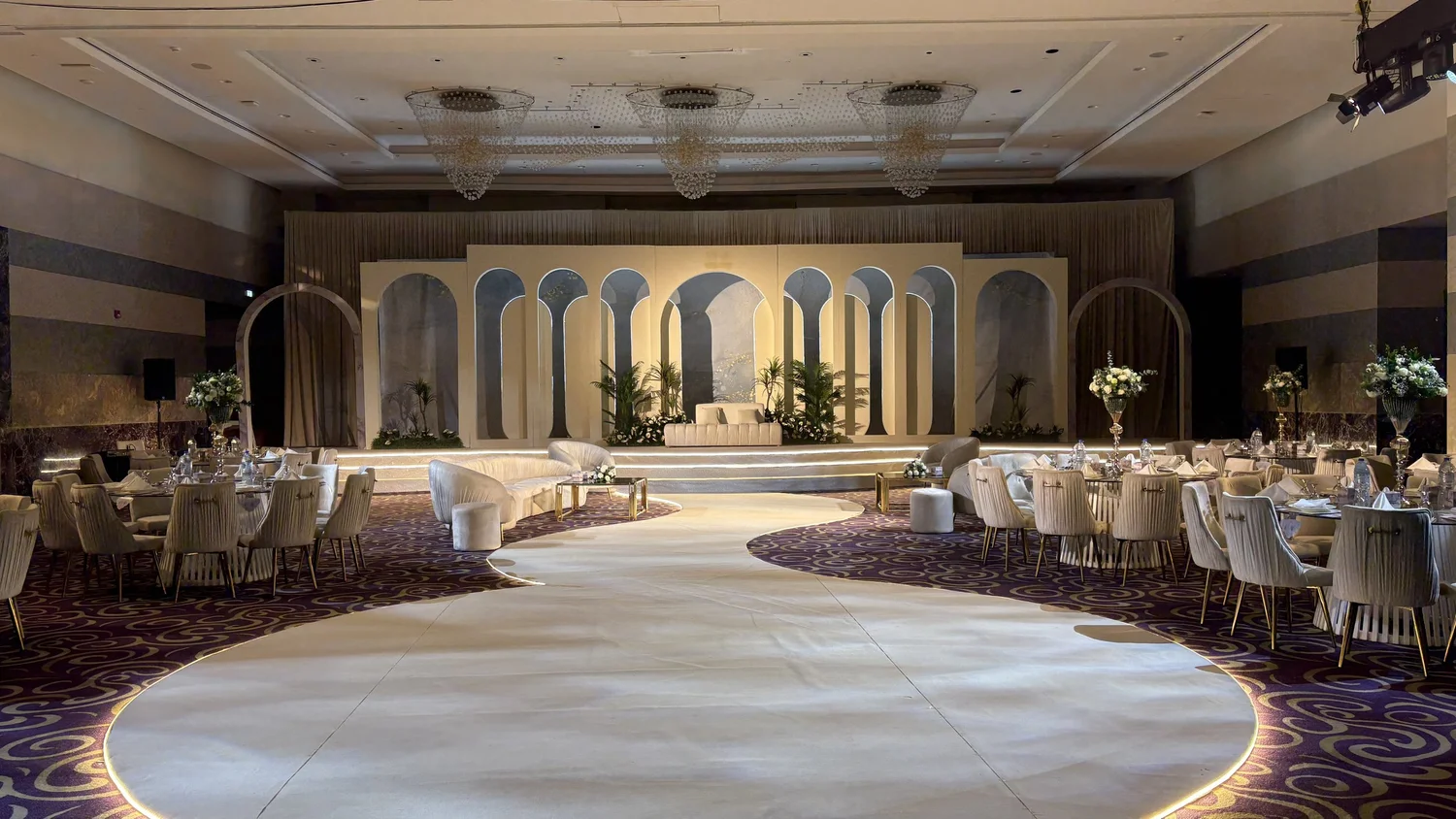
The zaffa is the procession that brings the couple in, traditionally with drums and live music. The job of the lighting is to announce, not to dazzle. Guests should feel the doors open, the music lift and a path of light lead the eye toward the kosha. In practice that means a clean, warm pathway wash along the aisle or corridor, side uplighting on walls or columns so the procession is framed, and a soft haze-free beam moment as the couple crosses the threshold. Because walking speed is slow and unpredictable, the cue should be triggered by an operator watching the procession, not locked to a fixed timeline. A frozen timecode and a procession that arrives thirty seconds late is the classic mismatch. If the music is live, brief the band leader on the cue so the lighting follows them rather than the other way round.
2. The kosha: the long portrait
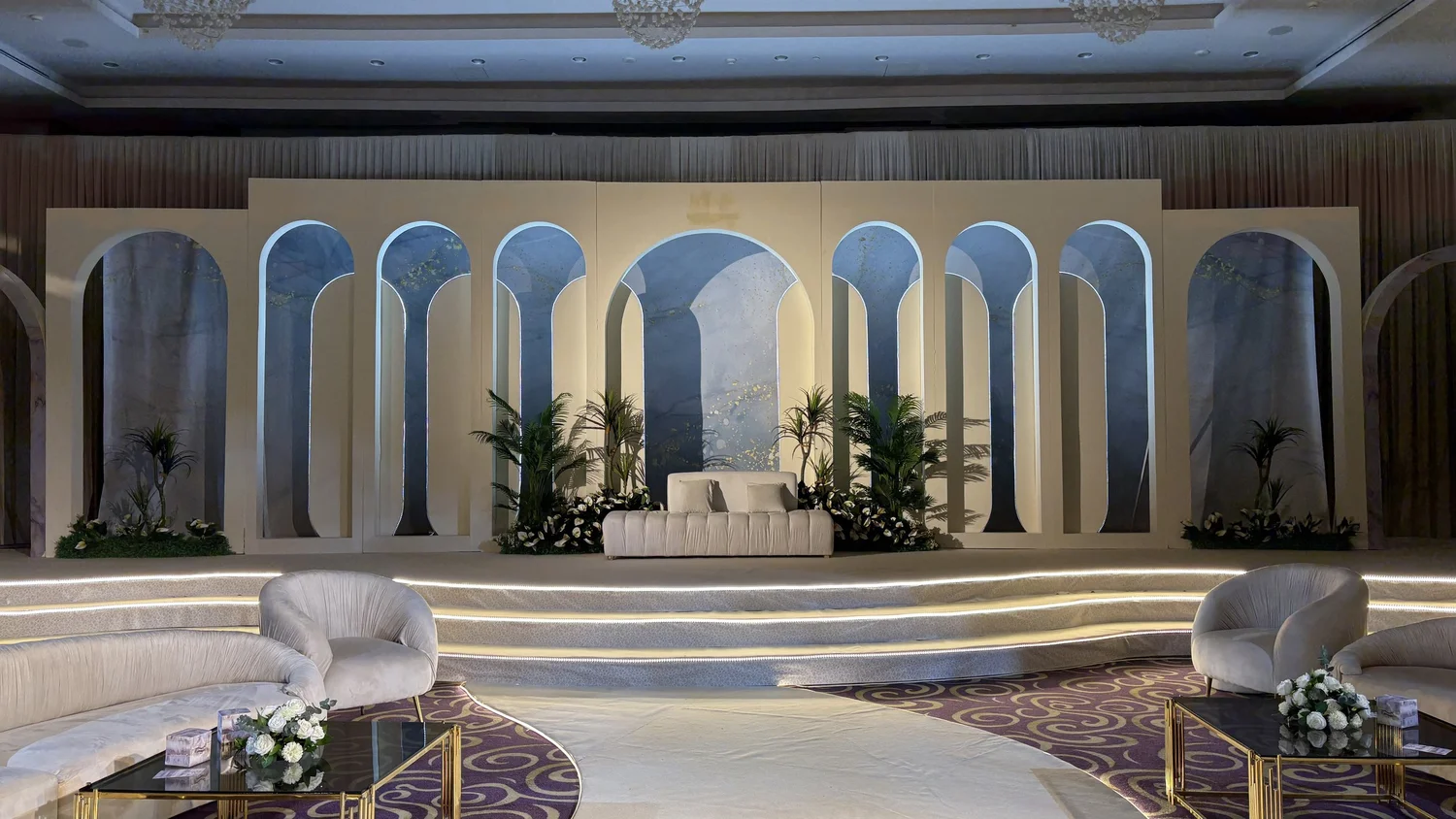
The kosha is where the couple sits for photographs and guest greetings, often for hours. It is the most photographed place in the room and the one that is lit the longest, so comfort matters as much as beauty. Skin tones should look natural, jewellery and embroidery should sparkle without glare, and the couple should not squint. We aim for soft, warm key light from the front and sides at a gentle level, a separate backdrop wash so the decoration glows, and a slow, subtle accent layer such as star patterns or soft texture on the wall behind. Avoid saturated colour directly on faces. Our deeper notes on stage dressing are in wedding stage design, and the same logic applies to a majlis-style seating area, covered in majlis lighting.
3. The celebration: movement and release
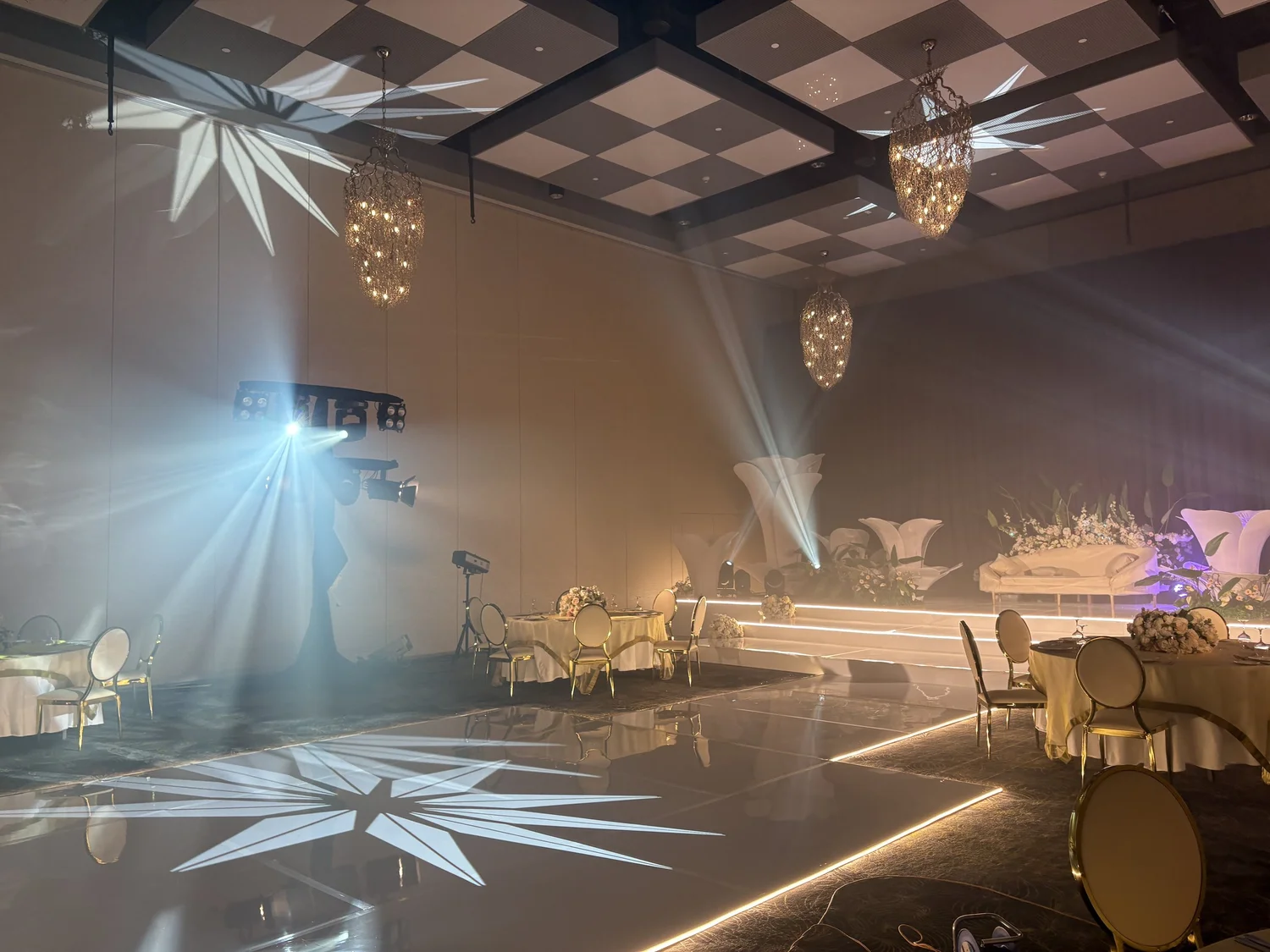
After the formal arrivals, the room changes. Music picks up, guests move, and the lighting is allowed to move with them. This is where moving heads, colour changes and a dance-floor look make sense, as long as they are programmed as a distinct scene so the kosha never suddenly flashes. A lighting desk with saved looks makes the switch between "receiving" and "celebrating" a single button, and it is far safer than ad hoc changes on the night.
Cue order for a typical evening
Below is an illustrative running order. Your timings will differ, and the point of the table is the logic: every row has one lighting job and one trigger.
| Moment | Lighting job | Trigger |
|---|---|---|
| Doors closed, guests seated | Soft ambient, kosha glowing, entrance dark | Operator on standby |
| Zaffa arrives | Pathway wash up, side uplight, warm beams | Manual, on the first drum or the doors opening |
| Couple reaches kosha | Key light up on the couple, backdrop wash steady | Manual, once seated |
| Greetings and photos | Stable, flattering, no movement | Hold for as long as needed |
| Dinner or refreshments | Room dimmed warm, tables lifted gently | Hosted by the planner |
| Celebration | Dance-floor scene, colour and movement | On the DJ or band cue |
| Exit | House lights up, pathway lit for safe departure | Manual |
What it costs, typically
Pricing depends mainly on venue size and how much needs to be built: truss, LED screens, a dance floor look, and whether sound is included. These are typical ranges, excluding 5% VAT, and a final quote needs a site visit.
| Setting | Typical range (AED, excl. VAT) |
|---|---|
| Private villa or garden wedding, kosha plus ambient | 8,000 – 30,000 |
| Hotel ballroom wedding, full stage and dance floor | 65,000 – 200,000 |
| Wedding with a large LED or projection-led feature | 45,000 – 250,000 |
For a deeper breakdown of what is inside those numbers, read wedding lighting and AV costs, and if you are comparing a bundled package with hiring each item separately, see package versus individual hire.
Six mistakes we see most
Lighting the kosha like a concert stage. Strong coloured backlight and moving beams look dramatic in a test and tiring over four hours. Keep the kosha steady and let motion live elsewhere.
Tying the zaffa to a fixed timeline. Processions run on their own clock. Use a manual trigger and a short, forgiving cue.
Ignoring the photographer. Mixed colour temperatures, flicker and deep shadows make photos and video harder to edit. Agree on a warm, consistent white for the kosha and tell the camera team early.
Forgetting the entrance and corridor. Guests judge the venue from the moment they arrive. A dark approach followed by a bright room feels abrupt.
Putting sound and light on different plans. The zaffa drums, the DJ and the lighting should be coordinated by one lead. Our guide to sound system rental covers speaker placement for large halls.
Leaving screens until the end. If you want a monogram or a short film, plan the screen position early. See LED screens for weddings.
Venue and season notes
Outdoor garden and beachfront weddings are most popular in the cooler months, roughly from late October to March, which is also the busiest period for suppliers, so booking early matters. Outdoor kosha lighting must deal with wind, humidity and sand, so fixtures need weatherproof housings or covers. Hotels often have their own rules for rigging points, power and sound limits, which we check before design starts. A good starting point for destination research is the official tourism sites such as Visit Abu Dhabi and Visit Dubai. For more on how gobos can dress a reception wall, see gobo projections for weddings.
Frequently asked questions
How early should we plan the lighting for an Emirati wedding?
We recommend starting four to eight weeks before the date for a hotel ballroom and at least three weeks for a villa or garden. That leaves time for a site visit, a cue sheet and coordination with the band, planner and photographer. Peak winter dates fill quickly, so earlier is better.
Can the zaffa lighting be synchronised to live drums?
Yes, but not by a fixed timeline. The best approach is an operator who watches the procession and triggers a pre-programmed scene at the right moment. This keeps the cue forgiving if the entrance runs early or late and avoids lights finishing before the couple arrives.
What colour of light is best for the kosha?
A warm, consistent white is the safest base because it flatters skin and gold detail and is easy for photographers to edit. Add colour to the backdrop rather than the faces. We confirm the look with the camera team beforehand so the photos match what guests see.
Do you work with separate men's and women's halls?
Yes. We design each hall as its own space with its own cue sheet and operator where needed, so the lighting, sound and screens suit how each hall is used. We discuss privacy and camera rules with the family and planner before the design is finalised.
What is a realistic budget?
A villa or garden wedding with a kosha and ambient lighting typically sits around AED 8,000 to AED 30,000 excl. VAT. A hotel ballroom wedding with a full stage and dance floor typically runs AED 65,000 to AED 200,000 excl. VAT. A site visit gives a firm number.
Planning a wedding anywhere in the UAE?
Send the date, venue and guest count. We will reply with a first cue plan and a typical price range.
Message us on WhatsAppPrices are typical ranges in AED excluding 5% VAT and depend on venue, rigging and scope. Scenarios are illustrative. Related: wedding lighting and production.